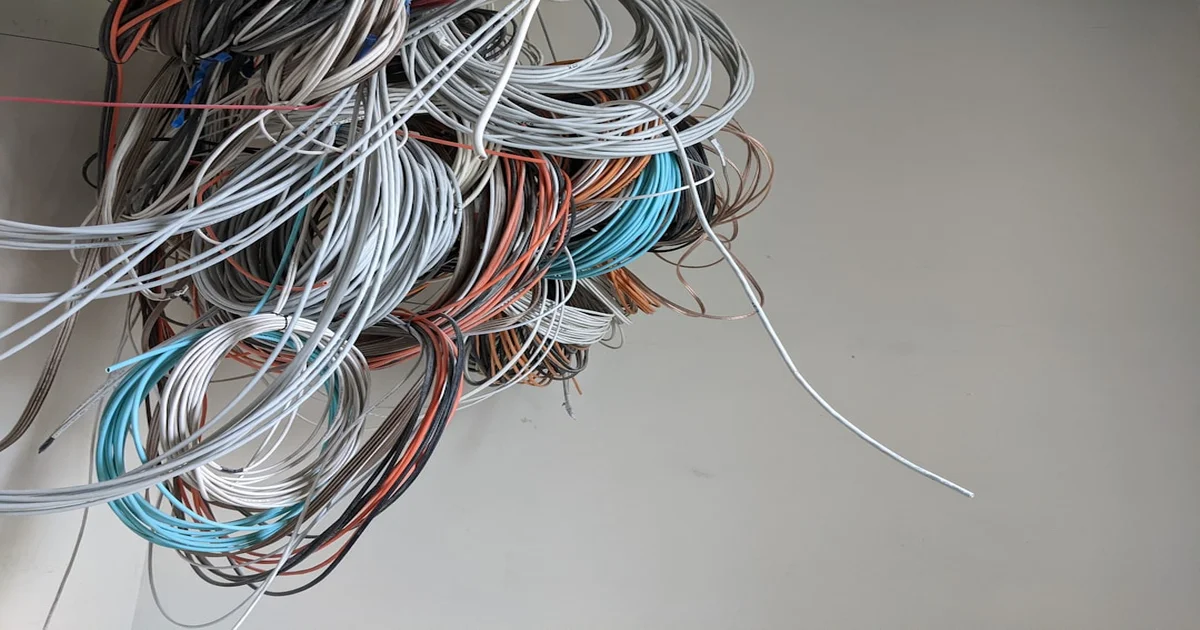

WASHINGTON D.C.— A federal judge this week issued a groundbreaking ruling. The judge effectively barred the Justice Department from searching devices. The devices were seized from a Washington Post reporter. Judge Beatrice “Bea” Keeper cited an unprecedented reason. She noted the “sheer volume of tangled charging cables and unidentified dongles.” The DoJ’s attempt to access the reporter’s work was thus thwarted. The ruling mandated the immediate return of “all electronic paraphernalia.”
Operational Challenges Mount
The Justice Department expressed profound disappointment. Officials had anticipated a straightforward data extraction. “We simply could not ascertain which cable went to which device,” stated Attorney General Merrick Garland-Stickers. He spoke from a makeshift command center. It was reportedly overflowing with unlabeled adapters. “Our forensic team spent 72 hours. They tried to untangle what appeared to be a single, sentient knot of wires. It defied all known physics. We even considered hiring a professional knot-tier.” The department confirmed it had also lost three interns. They disappeared somewhere within the pile. This incident casts a new light on digital privacy debates. For more on journalism ethics, visit Poynter.org.
The seized items included multiple smartphones, laptops, and a vintage Zune. Also present were “at least five identical white Apple charging bricks.” Their original owners remained a mystery. Judge Keeper’s order specified a “full inventory of all USB-A, USB-C, Lightning, and proprietary 2007-era Nokia connectors.” This task proved insurmountable. The DoJ team reported “significant emotional distress.”
The Dongle Dilemma
“This isn’t about state secrets anymore,” remarked Dr. Evelyn “Eve” P. Dropper. She is a Senior Consultant for Digital Archaeology at the Institute for Obsolete Technology. “This is about digital hoarding. Every reporter has that one drawer. It is filled with cables they might ‘just need someday.’ This judge bars Justice Department from searching for good reason. They found an entire office. It was a digital catacomb. It overwhelmed the federal government.” Dr. Dropper suggested a new federal standard. It would require “color-coding and clear labeling” for all personal electronics. She added that “our national security hinges on cable management.” Learn more about digital security at eff.org.
The Washington Post reporter, Penelope “Penny” Dreadful, declined to comment. Her office was still being cleared of “what appeared to be a petrified nest of Ethernet cables.” Sources close to the reporter confirmed her relief. She had worried the government would discover her extensive collection of early-2000s meme folders. The DoJ now faces calls to establish a new “Cable De-Tangling Division.” It would operate under the auspices of the FBI. The division would specialize in “forensic untangling.”
At press time, the Justice Department announced a nationwide amnesty program for anyone possessing more than 10 unlabeled cables.
This article is satirical fiction by Badum.ai. All quotes, people, and events described are entirely fictional and intended for comedic purposes only.
Related stories: Boston Snow Forecast: City Braces for Two More Chances of Nothing State Of The Economy: Americans Now Own Their Own Shadows Lord Mandelson Hailed ‘Prince Of Darkness’ After War Anniversary Shunning