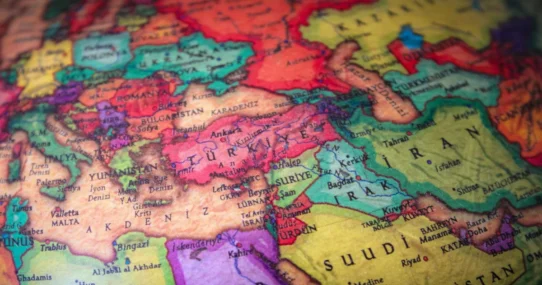




TEHRAN—Iran officially neared a deal to acquire advanced supersonic anti-ship missiles from China this week. The landmark agreement surprised many international observers. However, sources close to the negotiations revealed a surprising motive. The Islamic Republic reportedly plans to leverage the cutting-edge technology. It seeks to drastically improve its burgeoning national express delivery service.
Accelerated Appetites
“We needed a solution for timely samosa delivery,” stated Dr. Aram Jafari, Head of Culinary Logistics for the Iranian Ministry of Gastronomy and National Security. “Our current drone fleet struggles with peak dinner rushes. These new missiles offer unparalleled speed.” He emphasized the 20-minute delivery guarantee would now be a global standard. The deal, initially reported by Reuters, was widely misunderstood.
Early tests showed promising results. A prototype missile reportedly delivered a piping hot kebab from Mashhad to Tehran in under seven minutes. Minor issues included widespread sonic booms over residential areas. Several windows in the capital’s northern districts shattered. The government dismissed these as “acceptable collateral noise.”
The Need for Speed
Lieutenant Commander Zahra Hassanpour, Chief of Fast-Food Ordinance Integration, outlined the tactical advantages. “Imagine a world where your falafel arrives before you even hang up the phone,” Hassanpour explained. “This is not just about speed. It’s about culinary dominance.” She also mentioned plans to equip the missiles with specialized thermal packaging. This ensures optimal food temperature.
The acquisition includes advanced guidance systems. These will pinpoint specific apartment windows for accurate drops. Engineers are reportedly developing a delicate parachute mechanism. It will deploy just moments before impact. This prevents structural damage to food containers. Initial designs faced challenges with sudden deceleration. One test run reportedly splattered a family-sized pizza across three city blocks.
Concerns arose from rival delivery services. “We cannot compete with Mach 3 delivery times,” lamented Omar Khayyam, CEO of ‘Swift Spoon’ courier service. “Our mopeds are already struggling with potholes.” Khayyam hinted at potential legal challenges. He cited “unfair market advantage” and “unnecessary atmospheric disruption.” For more on the global delivery wars, see this Wikipedia article on food delivery.
At press time, the Ministry of Gastronomy and National Security announced a public competition to name the first supersonic delivery missile. Favorite suggestions included “The Kebab-erator” and “Project Falafel Phoenix.”
This article is satirical fiction by Badum.ai. All quotes, people, and events described are entirely fictional and intended for comedic purposes only.
Related stories: Tori Amos’s ‘Stronger Together’ Unites Feuding Squirrels ICE Officer Training Drastically Simplified To ‘Point And Yell’ Pentagon General Unveils Acute Iran Attack Risks: ‘Papercuts are Imminent’